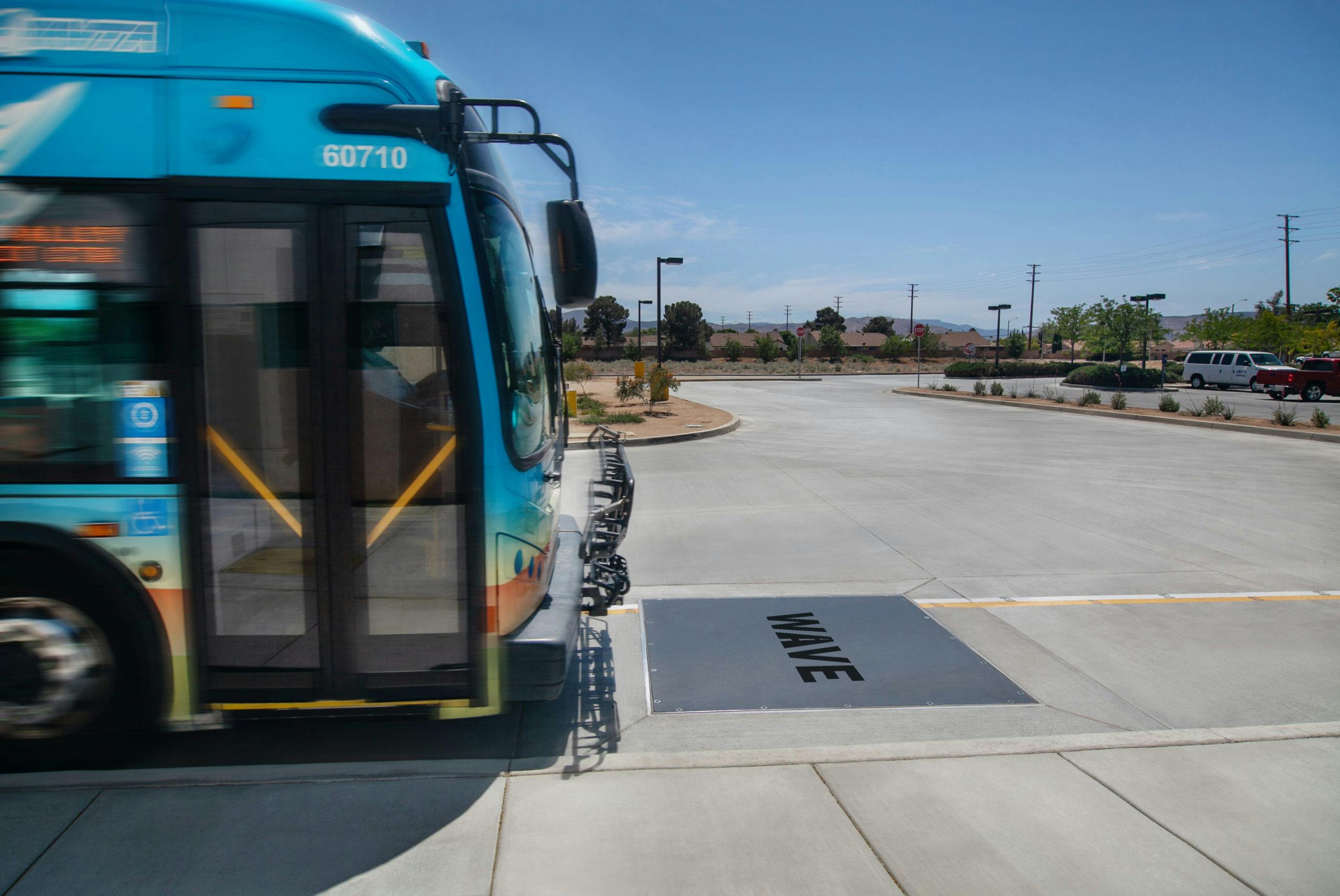
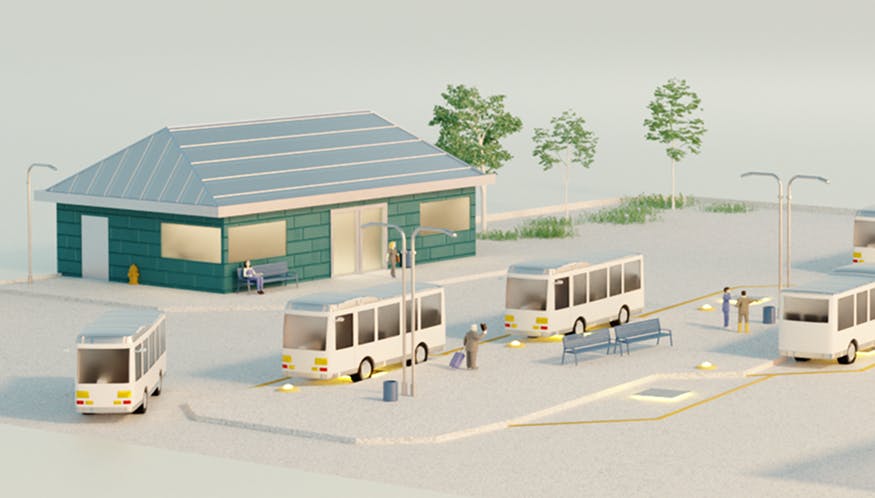
Add range at the stops you already make.
WAVE delivers 125kW to 500kW+ wirelessly during the 1–3 minute passenger stops on the route. Each stop adds range, so the bus's usable range is no longer limited to a single charge.
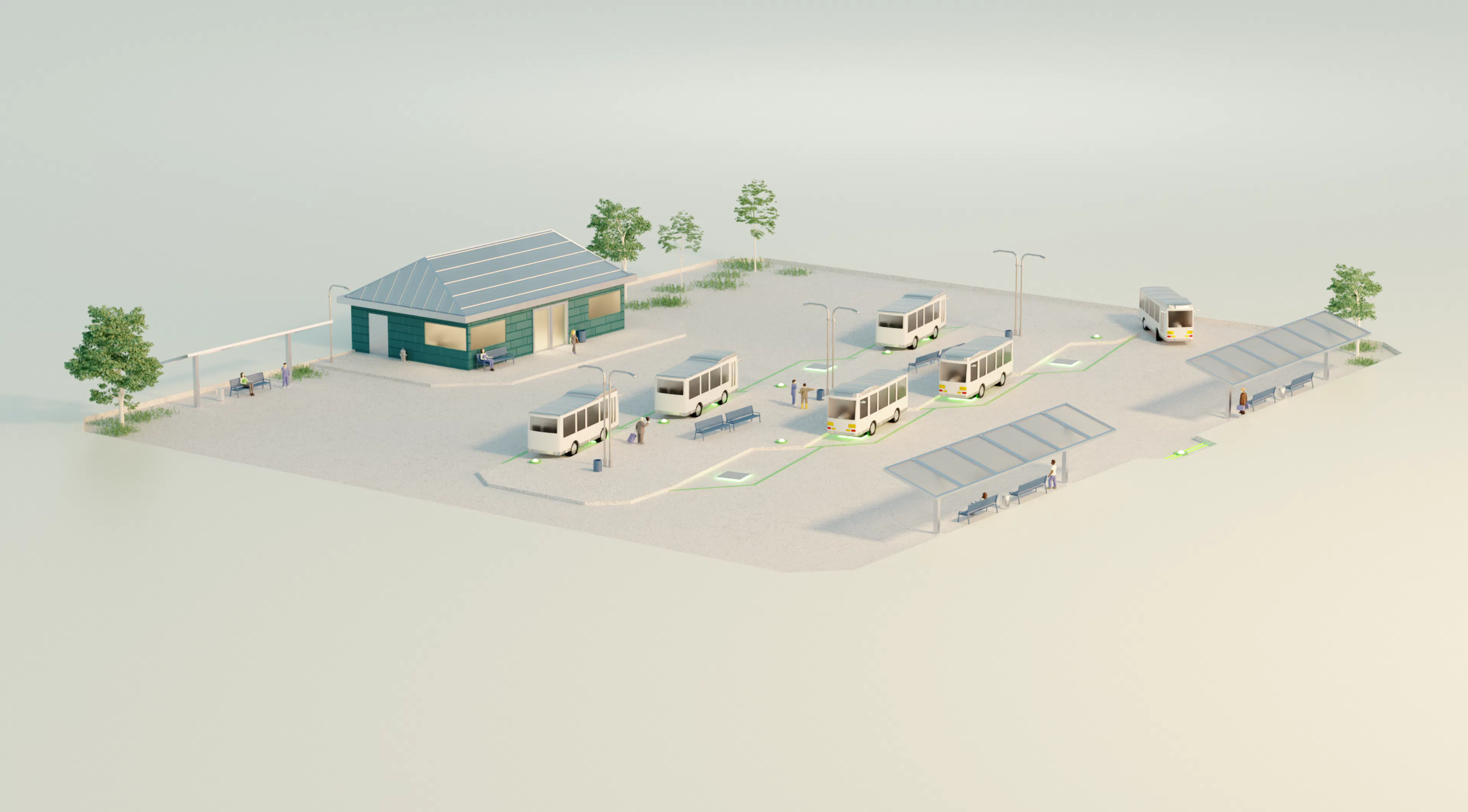
The most reliable way to extend an electric bus's range isn't a bigger battery — it's charging the bus while it works. WAVE Charging lets buses top up wirelessly during normal passenger stops and layovers, so they gain range continuously through the day instead of being limited by a single overnight charge. Agencies have used this to run electric buses on routes longer than the diesel buses they replaced.
A battery-electric bus that only charges at the depot is capped by whatever it leaves with each morning. Add a longer route, a hot day running the HVAC, or an extra trip, and the range no longer fits the schedule. The usual answers — buy bigger batteries, buy more buses, or shorten routes — all cost money or service.
Opportunity charging breaks that cap. Instead of treating range as a fixed number set at the depot, the bus rebuilds range every time it stops.
WAVE delivers 125kW to 500kW+ wirelessly during the 1–3 minute passenger stops on the route. Each stop adds range, so the bus's usable range is no longer limited to a single charge.
Because charging happens in-service, a bus can run a route that exceeds its battery's standalone range — the gap is filled continuously rather than all at once.
At 92%+ grid-to-battery efficiency, wireless charging adds range as effectively as plugging in — without the cables or connectors of plug-in charging.
Because range is replenished in-route, agencies can specify smaller, lighter, cheaper batteries and still cover demanding schedules.
The Antelope Valley Transit Authority in Lancaster, California uses WAVE wireless charging at key stations to extend electric bus service onto longer routes — without a massive depot expansion. The result: electric buses that exceed the range of the diesel buses they replaced, at lower maintenance and total cost of ownership.
Charge the bus while it operates. In-route ("opportunity") wireless charging adds range during normal passenger stops, so the bus isn't limited to the energy it left the depot with — it rebuilds range across the day.
Buses accumulate range across many 1–3 minute stops rather than charging fully at once. With 125kW to 500kW+ per stop, agencies run routes that exceed a bus's standalone battery range while staying on schedule.
Yes — that's the point. Because range is replenished in-route, you can run longer routes on the same or smaller batteries, avoiding the weight, cost, and capital of oversizing every bus.
No. Charging happens during the stops buses already make for passengers, so range is added without adding time to the schedule.