Opportunity charging keeps buses in service.
Buses top up during the 3-5 minute stops they already make. Instead of pulling a vehicle for hours of depot charging, an agency adds range continuously throughout the route.
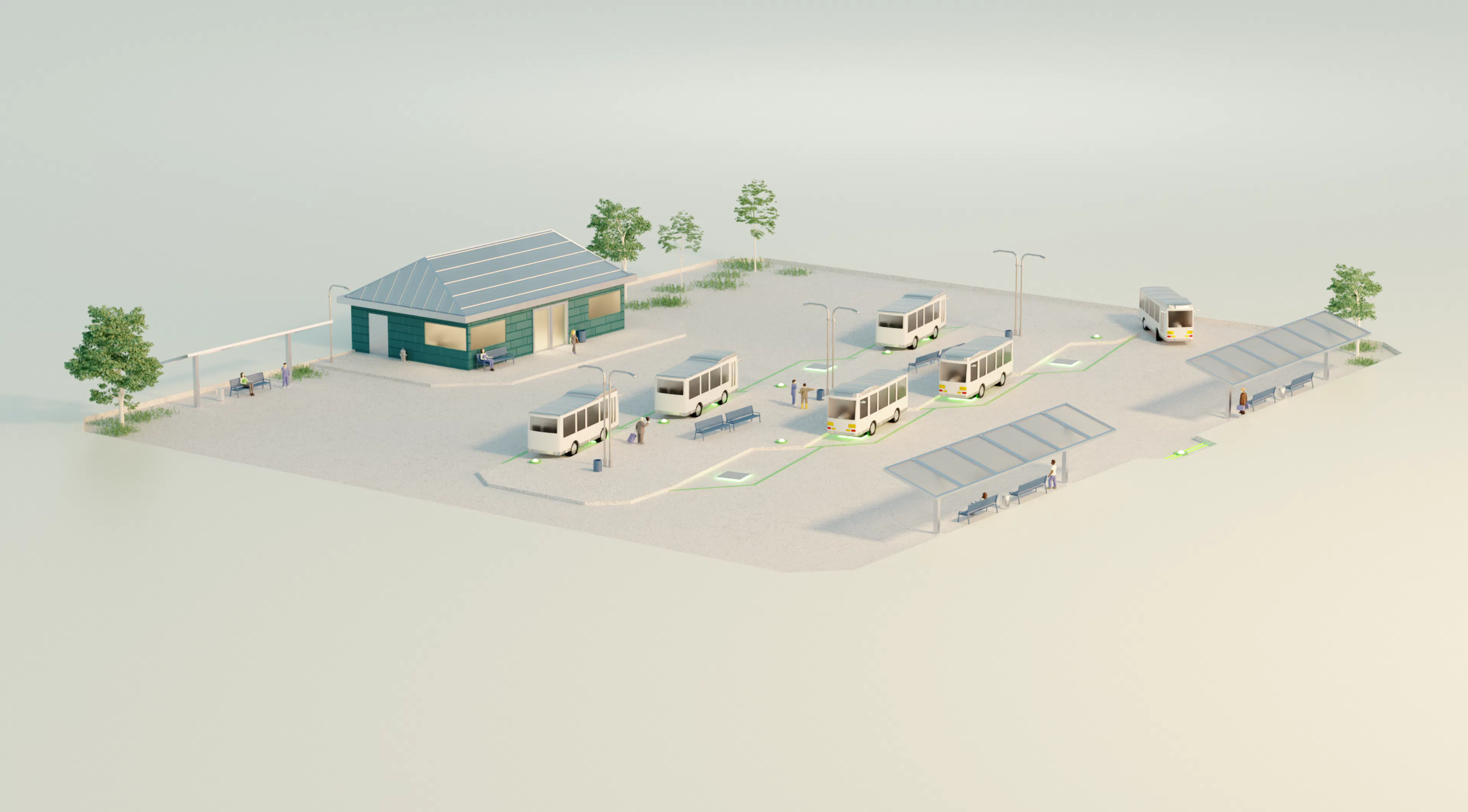
WAVE Charging lets electric transit buses charge wirelessly while they run their route — buses top up during normal passenger stops and layovers, so they build range across the day instead of sitting at a depot. Each system delivers 125kW to 500kW+ with no cable to plug in and no pantograph to align — the driver just taps a button to start.
Buses top up during the 3-5 minute stops they already make. Instead of pulling a vehicle for hours of depot charging, an agency adds range continuously throughout the route.
Charging in-route means fewer depot chargers, less electrical build-out, and smaller batteries — agencies using WAVE have cut depot charging infrastructure by half while holding full service.
Sealed, ground-level systems work through snow, ice, and flooding that disable exposed plug-in chargers. Zero exposed electrical parts means zero weather-related charging failures at a busy stop.
The driver starts a charge with a single button press; there are no cables to connect and no pantograph to align, so there's almost nothing to train on and drivers stay focused on the route and passengers.
A pad embedded at a station or layover transfers power across an air gap to a receiver under the bus. The bus parks over the pad, the driver taps to start, and power flows at up to 500kW before it pulls away with added range — no cable, every stop. Efficiency is 92%+ grid to battery, comparable to plug-in. See how WAVE wireless charging works →
The Antelope Valley Transit Authority in Lancaster, California uses WAVE wireless charging to extend electric bus service onto longer routes without a massive depot expansion — letting its electric buses exceed the range of the diesel buses they replaced, at lower maintenance and total cost of ownership.
WAVE also delivers its highest-power systems in demanding real-world service: at Universal Studios Hollywood, four 500kW WAVE systems wirelessly charge the park's electric Studio Tour trams at the ends of their route — among the largest battery-electric people movers in the U.S., topping up with no cable to plug in, all day.
Buses don't fully charge at any one stop — they accumulate range across many 1–3 minute passenger stops throughout the route. WAVE delivers 125kW to 500kW+, so each stop adds meaningful range while the bus stays on schedule.
It sharply reduces the need for it. By charging in-route, transit agencies using WAVE have cut depot charging infrastructure by up to 50% while maintaining full service — buses charge as they run rather than sitting plugged in.
Yes. WAVE achieves 92%+ total system efficiency from grid to battery, comparable to the best wired high-power chargers, with none of the cables or connectors of plug-in charging.
Yes. The pads are sealed and installed at ground level, so snow, ice, and standing water that disable exposed plug-in chargers don't stop them. There are no exposed contacts to freeze or fault.
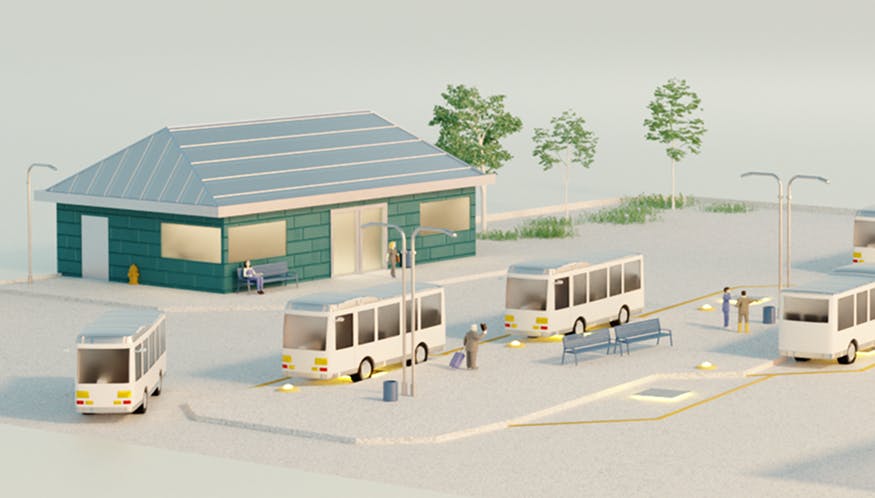
The full picture for transit charging
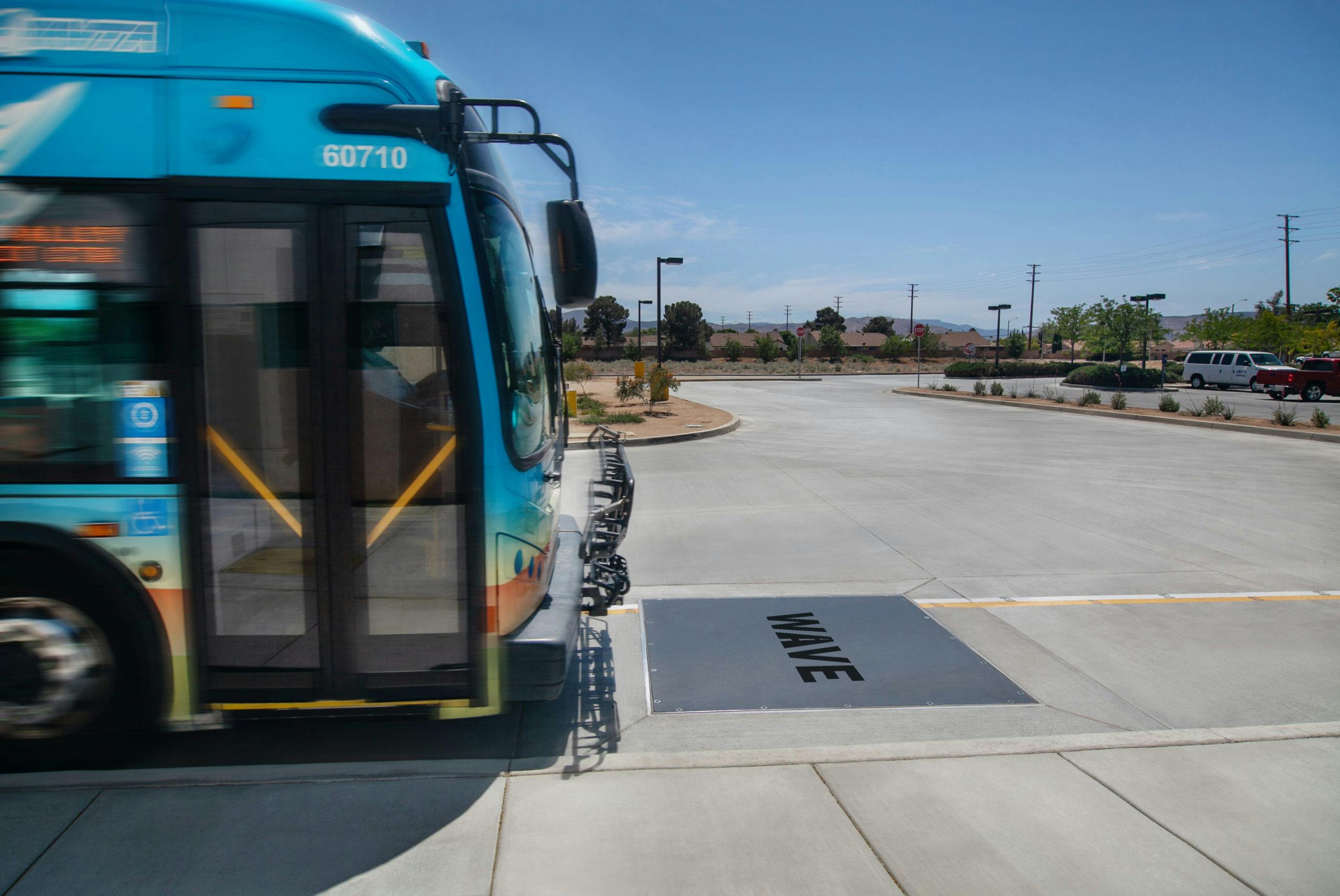
The range problem, solved with opportunity charging

Understand the technology behind WAVE's wireless charging