No cable to connect.
The vehicle positions itself over a ground pad and power transfers across an air gap — nothing extends, latches, or has to be aligned or plugged in by hand. Charging is started by command, not by a person at the vehicle.

An autonomous vehicle has no driver to plug it in — so the charger can't depend on one. WAVE Charging needs no cable or connector: the vehicle parks over a pad and charging is initiated by command rather than by a person plugging in, delivering 125kW to 500kW+ wirelessly. That removes the one step autonomy can't do for itself — handling a charging cable — which makes wireless the natural energy model for driverless commercial fleets.
A self-driving truck, shuttle, or yard vehicle can do everything except connect a charging cable. Every plug-in approach reintroduces the one thing autonomy removes — a person at the vehicle. The options are to keep staff on hand purely to plug and unplug, build complex robotic connectors, or remove the cable entirely.
Wireless charging removes the cable. The vehicle handles charging the same way it handles driving: autonomously.
The vehicle positions itself over a ground pad and power transfers across an air gap — nothing extends, latches, or has to be aligned or plugged in by hand. Charging is started by command, not by a person at the vehicle.
Driverless vehicles can charge during the stops they already make — staging, loading, layover — without routing a human to meet them.
WAVE delivers 125kW to 500kW+ at 92%+ efficiency, the same high-power wireless charging proven on commercial fleets today — not low-power consumer charging.
WAVE's wireless charging already runs commercial vehicles in the field; autonomy is the use case it was designed to serve.
True driverless deployments are still emerging across the industry, but the cable-free charging they require is not theoretical. At Universal Studios Hollywood, four 500kW WAVE systems charge the park's electric Studio Tour trams at the ends of their route — the trams top up with no cable to connect, every cycle, all day. That is the core of what an autonomous fleet needs: high-power energy transferred with no cable for anyone to plug in.
WAVE's roadmap centers on becoming the charging solution of choice for autonomous commercial and transit fleets — extending today's proven cable-free opportunity charging to vehicles that drive themselves.
Because there's no driver to plug them in. Wireless charging needs no cable — the vehicle parks over a pad and charging is started by command — so a driverless fleet can refuel without a person, or a robot, to connect a cable.
Yes. WAVE delivers 125kW to 500kW+ at 92%+ efficiency — the same industrial-scale wireless charging proven on transit buses and port equipment today, not low-power consumer charging.
Yes. WAVE transfers power wirelessly with no cable to connect — including the 500kW charging of Universal Studios Hollywood's electric trams at their route endpoints. Charging is initiated by a control rather than by plugging in a connector, which is what lets it extend to vehicles with no driver.
Vehicles charge during the stops they already make in their cycle — staging, loading, or layover — with no cable to connect and no detour to a staffed charger, so energy fits into the autonomous cycle.

Understand the technology behind wireless charging
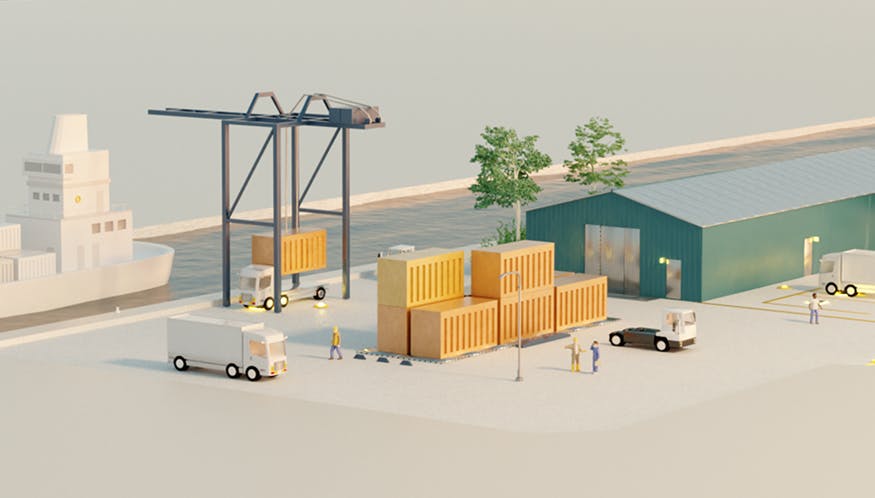
Autonomous yard equipment today and tomorrow
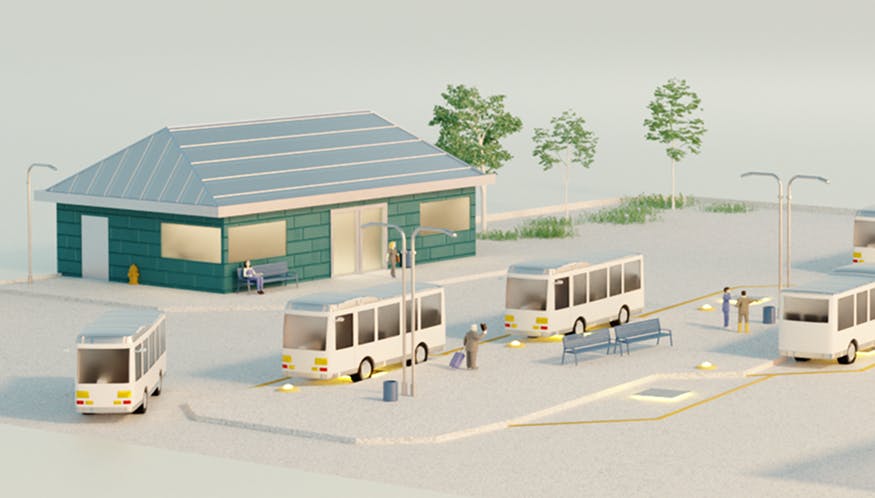
Including autonomous shuttles